

Have you ever wondered why your live broadcast suffers from annoying lag while others stream in perfect, crisp clarity? The secret to a professional setup often lies in your choice of hardware. In 2024, selecting the right iptv encoder hdmi device is the most critical step for achieving high-quality results across all your digital platforms.
Reliable technology ensures your audience stays engaged without frustrating interruptions. If you feel overwhelmed by the technical options, you are not alone. Expert support is available by calling +1(605)846-9971 for personalized assistance tailored to your specific needs.
Our team helps you navigate the complex landscape of streaming gear to find the perfect fit. By the end of this guide, you will have a clear understanding of how to choose the best equipment for your unique broadcast requirements.
Key Takeaways
- Understand the role of hardware in professional streaming.
- Learn how to identify the best equipment for your specific needs.
- Discover why stability is the foundation of a successful broadcast.
- Get expert guidance by calling +1(605)846-9971 for support.
- Master the basics of high-quality digital signal processing.
Understanding the Role of an IPTV Encoder HDMI
Every successful broadcast relies on an iptv encoder hdmi to bridge the gap between your camera equipment and the internet. This device acts as the critical link that transforms raw video signals into a format suitable for digital distribution. Without this hardware, your high-definition content would remain trapped in a local environment, unable to reach a global audience.
The primary function of this technology is to compress heavy video data into manageable streams. By using advanced codecs, an iptv encoder hdmi ensures that your footage maintains high visual fidelity while traveling across network infrastructure. This process is essential for preventing buffering and maintaining a smooth viewing experience for your audience.
Understanding how these devices handle data is vital for anyone building a professional streaming setup. The encoder takes the uncompressed HDMI input and converts it into a reliable IP-based output. This conversion allows your content to be sent to streaming platforms, content delivery networks, or private servers with minimal latency.
To better understand the transformation, consider the differences between raw signals and encoded streams in the table below:
| Feature | Raw HDMI Signal | Encoded IP Stream |
|---|---|---|
| Data Size | Extremely Large | Highly Compressed |
| Transmission | Short Distance Only | Global Internet |
| Bandwidth Usage | Very High | Optimized/Efficient |
| Primary Use | Local Monitoring | Live Broadcasting |
By utilizing an iptv encoder hdmi, you gain full control over your broadcast quality. This hardware ensures that your video remains crisp and clear, even when bandwidth is limited. Investing in the right technology is the most effective way to guarantee a professional-grade streaming experience for your viewers.
Key Technical Specifications to Consider Before Buying
Before you invest in hardware, you need to understand the technical specs that drive high-quality broadcasts. Selecting the right video streaming device is a critical step in ensuring your content reaches your audience without interruption. By focusing on core performance metrics, you can avoid common pitfalls that plague amateur setups.
Bitrate Control and Compression Standards
Modern broadcasting relies heavily on efficient compression to maintain quality while saving bandwidth. You should look for a video streaming device that supports both H.264 and H.265 standards. H.265, or HEVC, is particularly effective at delivering high-definition video at lower bitrates compared to older formats.
Effective bitrate control allows you to balance visual fidelity with your available upload speed. If your bitrate is too high, you risk buffering; if it is too low, your image quality will suffer. Consider these essential factors when evaluating your options:
- Adaptive Bitrate Support: Ensures smooth playback across varying network conditions.
- Hardware Encoding: Offloads processing from your computer to prevent system crashes.
- Resolution Compatibility: Confirms the device handles your required output, such as 1080p or 4K.
Latency and Network Stability Requirements
Latency is the silent killer of live engagement. A reliable video streaming device must minimize the delay between the action and the broadcast to keep your audience connected. Network stability is equally vital, as even a momentary drop in connection can ruin a professional production.
To prevent bottlenecks, ensure your hardware supports stable wired connections rather than relying solely on Wi-Fi. High-quality encoders often include advanced jitter buffers to smooth out minor network fluctuations. Use the table below to compare how different hardware features impact your overall streaming performance.
| Feature | Entry-Level | Professional |
|---|---|---|
| Compression | H.264 Only | H.264 & H.265 |
| Latency | Moderate | Ultra-Low |
| Stability | Standard | High-Redundancy |
Ultimately, choosing a video streaming device that prioritizes these technical standards will provide a seamless experience for your viewers. Investing in robust hardware today saves you from troubleshooting complex network issues tomorrow.
Top Picks for Professional Broadcast Encoders
High-stakes production environments demand equipment that offers both stability and advanced features. When you are managing a complex stream, your hardware must handle live video encoding with absolute precision and minimal downtime.
Kiloview E1 Video Encoder
Overview
The Kiloview E1 is a premier broadcast encoder designed to support continuous operation in demanding settings. It is built with a robust chassis that protects internal components during long-term use, making it a favorite among industry professionals who cannot afford technical failures.
Pros
- Exceptional reliability for 24/7 streaming operations.
- Highly intuitive web-based interface for quick configuration.
- Compact and durable design suitable for mobile production kits.
Cons
While the device is powerful, new users might find the advanced network settings slightly complex. Mastering the full potential of this unit requires a brief period of technical familiarization.
Features
This unit excels at live video encoding by supporting multiple streaming protocols simultaneously. It offers low-latency performance that ensures your audience receives content in real-time without stuttering. As a versatile broadcast encoder, it integrates seamlessly into existing workflows, providing the flexibility needed for modern digital production.
Reliable Solutions for Small Business Streaming
Small businesses often struggle to find the right balance between professional streaming quality and budget constraints. Finding a video streaming device that delivers consistent results is vital for reaching your audience effectively. Fortunately, modern hardware options allow smaller teams to scale their digital presence without excessive costs.
UrayCoder H.265 HDMI Video Encoder
The UrayCoder H.265 unit stands out as a top choice for organizations managing smaller production budgets. This versatile hdmi encoder simplifies the streaming process while maintaining high-quality output for various business applications.
Overview
This device is designed for users who need reliable performance without the complexity of high-end broadcast gear. It offers a straightforward interface that helps businesses get their content live quickly and efficiently.
Pros
- Highly cost-effective for small business budgets.
- Supports efficient H.265 compression to save bandwidth.
- Compact design fits easily into any workspace.
Cons
While powerful, the setup process may require a slight learning curve for beginners. Additionally, it features limited input options compared to larger, multi-channel broadcast units.
Features
The unit includes robust bitrate control and broad compatibility with major streaming platforms. It ensures your video streaming device remains stable during long broadcasts, providing peace of mind for your production team.
| Feature | UrayCoder Capability | Benefit |
|---|---|---|
| Compression | H.265/H.264 | High quality at lower data rates |
| Interface | HDMI Input | Easy camera connectivity |
| Streaming | RTMP/RTSP/UDP | Wide platform compatibility |
| Control | Web-based GUI | Simple remote management |
High-Performance Encoders for Live Event Production
High-performance streaming requires tools that simplify complex workflows for event producers. When you are managing a live broadcast, your equipment needs to be both fast and reliable to ensure a smooth viewer experience. Effective live video encoding is the backbone of any successful production, allowing you to deliver high-quality content to your audience without technical interruptions.
Magewell Ultra Stream HDMI
Overview
The Magewell Ultra Stream HDMI is a compact, standalone device designed to make professional streaming accessible. It allows users to record and stream high-quality video with minimal setup time. This unit is perfect for those who need to deploy quickly in fast-paced event environments.
Pros
One of the biggest advantages is the intuitive control interface. Users can manage the entire stream via a mobile app or a web browser, which removes the need for a dedicated computer. It is highly portable and offers consistent performance during long events.
Cons
While the device is powerful, it is limited to a single HDMI input. This might be a drawback for productions that require complex multi-camera switching. Users needing more inputs may need to pair it with an external switcher.
Features
The device supports simultaneous streaming and recording, ensuring you have a backup of your event. It also includes an HDMI loop-through feature, which is essential for monitoring your feed in real-time. This versatile hardware makes live video encoding much more manageable for small teams.
| Feature | Magewell Ultra Stream | Standard Encoder |
|---|---|---|
| Control Method | Mobile App/Web | Manual/PC Software |
| Portability | High | Low to Medium |
| Recording | Built-in | External Required |
| Setup Time | Under 5 Minutes | 15+ Minutes |
By choosing the right tools, you can ensure your live video encoding remains stable and professional. The Magewell Ultra Stream HDMI stands out as a reliable partner for any live event production.
Budget-Friendly Options for Home IPTV Setups
You can easily create a professional-grade home streaming environment without spending a fortune. Building a reliable system is now more accessible than ever for hobbyists who want to manage their own content distribution. Choosing the right hdmi encoder is the most important step in keeping your project within a reasonable budget.
TBS2603 HDMI to IP Encoder
Overview
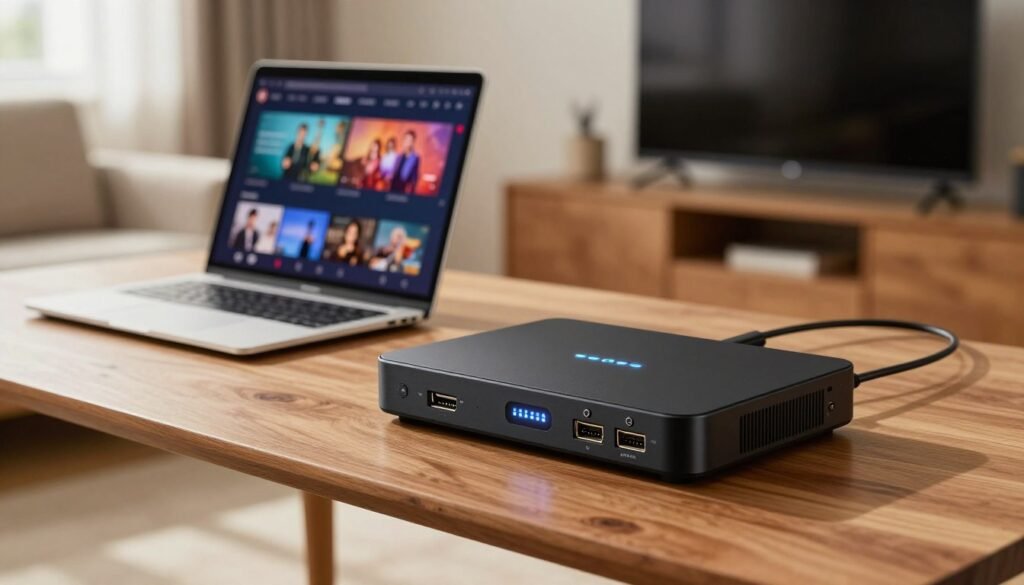
The TBS2603 is a versatile streaming media encoder designed specifically for users who need high performance at a lower price point. It allows you to capture HDMI signals and convert them into IP streams for various network applications. This device is perfect for those starting their journey into IPTV without needing complex or expensive broadcast equipment.
Pros
- Cost-effective pricing for home users.
- Supports H.264 and H.265 compression standards.
- Compact design that fits easily into any home office or media rack.
Cons
- Limited advanced features compared to high-end enterprise models.
- Setup interface may require a basic understanding of network protocols.
Features
This unit provides excellent stability for long-term streaming sessions. It supports multiple protocols, including HTTP, RTSP, and RTMP, ensuring compatibility with most popular platforms. By utilizing this hdmi encoder, you gain the flexibility to broadcast your content across your local network with minimal effort.
The Importance of Low Latency in Modern Broadcasting
Why does every millisecond matter when you are streaming live content to your audience? In today’s digital landscape, viewers expect instantaneous feedback and interaction. Whether you are hosting a live Q&A or broadcasting a competitive gaming event, any delay can break the immersion and cause your audience to tune out.
A high-quality broadcast encoder acts as the bridge between your raw video source and the final delivery platform. Its primary job is to compress data efficiently while maintaining high visual fidelity. If the encoding process takes too long, the gap between the real-world action and the screen becomes noticeable, which is often referred to as “lag.”
Modern hardware is designed to mitigate these delays through advanced processing algorithms. By optimizing the way data is packaged, a professional broadcast encoder ensures that your stream remains smooth and responsive. This technical precision is essential for maintaining viewer retention in a fast-paced environment where every second counts.
To better understand how different latency levels impact the viewer experience, consider the following breakdown of transmission speeds and their typical use cases:
| Latency Level | Transmission Speed | Best Use Case |
|---|---|---|
| Ultra-Low | Under 500ms | Interactive Gaming & Betting |
| Low | 1s to 3s | Live Sports & News |
| Standard | 5s to 30s | General VOD & Pre-recorded |
| High | Over 30s | Traditional Satellite TV |
Ultimately, choosing the right broadcast encoder is about balancing quality with speed. By investing in hardware that prioritizes low latency, you ensure that your content reaches your audience in real-time. This commitment to performance is what separates professional streams from amateur setups.
Optimizing Your Network Infrastructure for IPTV
Even the most advanced internet television encoder will struggle if your underlying network infrastructure is not properly configured. Achieving a professional-grade stream requires more than just high-quality hardware; it demands a stable and well-managed data path. By focusing on your network architecture, you ensure that your video packets travel efficiently from the source to your audience without interruption.
Bandwidth Management and QoS Settings
Effective bandwidth management is the backbone of any successful streaming operation. You must ensure that your internet television encoder has enough dedicated upload speed to handle the bitrate of your broadcast. Without proper allocation, other devices on your network can easily consume the resources needed for your live feed.
Quality of Service (QoS) settings are essential tools for prioritizing your video traffic. By configuring your router to recognize and favor streaming data, you prevent latency spikes caused by background tasks like file downloads or software updates. This prioritization keeps your stream smooth even during periods of high network activity.
Choosing Between Wired and Wireless Connections
While wireless technology has improved significantly, a wired connection remains the gold standard for reliable broadcasting. Ethernet cables provide a consistent, interference-free path that is vital for maintaining a steady stream. If you must use Wi-Fi, ensure you are operating on a clean channel with a strong signal to minimize packet loss.
The following table outlines the key differences between connection types to help you make an informed decision for your setup:
| Feature | Wired (Ethernet) | Wireless (Wi-Fi) |
|---|---|---|
| Reliability | High | Moderate |
| Latency | Very Low | Variable |
| Interference | Negligible | High |
| Setup Complexity | Moderate | Low |
Ultimately, building a resilient streaming architecture requires a proactive approach to network health. Investing time in these configurations will pay off by providing a seamless experience for your viewers. A well-optimized network is the foundation upon which all successful deployments are built.
Common Challenges When Configuring an IPTV Encoder HDMI
When you integrate an iptv encoder hdmi into your professional workflow, you might face a few common roadblocks. While these devices are designed for reliability, minor configuration errors can occasionally disrupt your live broadcast. Understanding these frequent pain points allows you to maintain your system proactively and minimize potential downtime during critical events.
Troubleshooting Connection Drops
Intermittent connection drops are often the most frustrating issue for streamers. If your stream frequently disconnects, start by verifying your physical network cables. A loose Ethernet connection is a common culprit that can cause unstable data transmission.
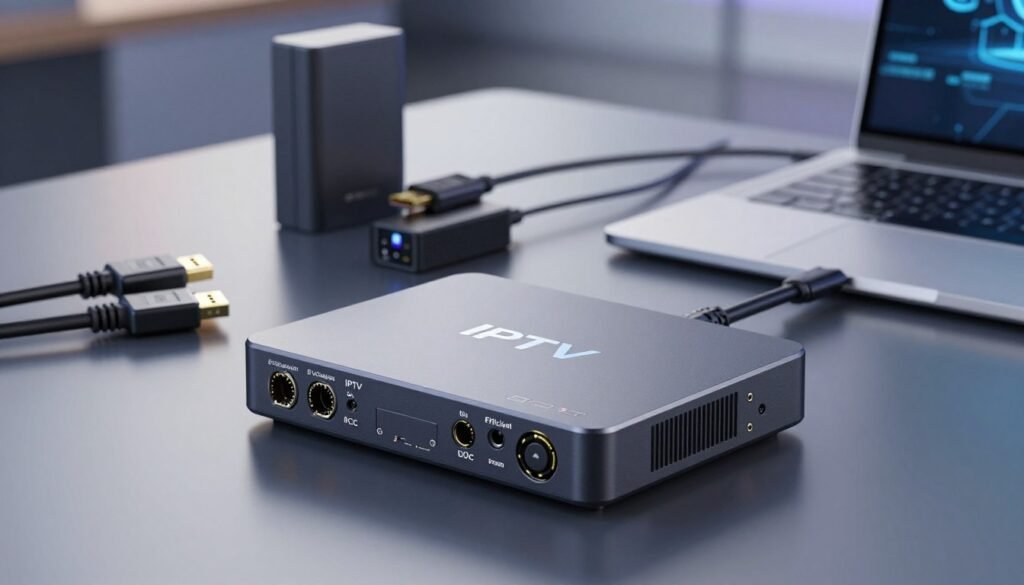
Next, check your IP address settings to ensure there are no conflicts on your local network. If your iptv encoder hdmi is set to a static IP that another device is also using, your connection will inevitably fail. Always reserve a dedicated IP address for your encoder within your router settings to ensure a stable, uninterrupted link.
Resolving Audio and Video Sync Issues
Persistent audio-video synchronization errors can ruin the viewer experience. These issues usually stem from a mismatch between your frame rate settings and your chosen compression standard. Ensure that your iptv encoder hdmi is configured to match the source input exactly to prevent processing delays.
If the audio still lags behind the video, try adjusting the buffer settings in your control panel. Sometimes, a slight increase in buffer size provides the processor with enough time to align the audio packets with the video frames. By fine-tuning these parameters, you can achieve a professional, seamless broadcast that keeps your audience engaged.
Expert Advice and Professional Support Services
Setting up a high-quality broadcast system often involves navigating complex technical hurdles. Even with the best hardware, you might encounter configuration challenges that require a deeper level of expertise to resolve effectively.
Our team understands that every network environment is unique. We provide tailored support services designed to help you get the most out of your equipment, ensuring your broadcast remains stable and professional at all times.
Getting Personalized Help at +1(605)846-9971
When you integrate a streaming media encoder into your workflow, you deserve reliable guidance. If you find yourself stuck during the installation process or facing unexpected network bottlenecks, our technicians are ready to assist you.
You can receive personalized technical support by calling +1(605)846-9971 for expert guidance. Our specialists have extensive experience with various hardware configurations and can help you troubleshoot difficult scenarios quickly.
We believe that professional support is a key component of any successful long-term streaming strategy. Do not let technical difficulties slow down your production schedule. Call +1(605)846-9971 for expert advice and top-quality solutions today.
Future Trends in Digital Video Encoding Technology
Looking ahead, the world of digital video encoder technology is poised for a massive transformation. The industry is moving at a breakneck pace, with new breakthroughs constantly emerging to boost both efficiency and visual fidelity.
As an internet television encoder becomes more sophisticated, we are seeing a major shift toward AI-driven compression. This technology allows hardware to analyze video frames in real-time, intelligently allocating bits to complex scenes while saving bandwidth on static ones. This results in a much smoother viewing experience for your audience, even when network conditions are less than ideal.
Another significant trend is the move toward cloud-based processing. By offloading heavy computational tasks to the cloud, a modern digital video encoder can maintain a smaller physical footprint while delivering professional-grade output. This flexibility is a game-changer for creators who need to scale their operations without constantly upgrading their local hardware.
Staying informed about these developments is essential for anyone serious about their streaming infrastructure. By keeping an eye on these trends, you can make smarter, long-term investments in your setup. Choosing a versatile internet television encoder today ensures that your system remains compatible with the high-quality standards of tomorrow.
Conclusion
Selecting the right digital video encoder serves as the foundation for your broadcast success. This choice dictates the clarity and stability of your content for every viewer.
You now possess the knowledge to navigate complex technical specifications and hardware options. Implementing a high-quality digital video encoder ensures your signal remains sharp across all network conditions.
Your journey toward professional streaming starts with these strategic hardware investments. Proper setup and network management turn basic equipment into a powerful broadcasting suite.
Our team remains ready to support your specific project goals at +1(605)846-9971. Reach out to discuss your unique requirements or to troubleshoot complex integration tasks.
We look forward to seeing your high-quality streams reach audiences everywhere. Start your setup today to experience the difference that professional-grade technology brings to your digital presence.


